
Marktleiders in Rotterdam analyseren de krachten die de capaciteit hervormen
Door Amy McLellan
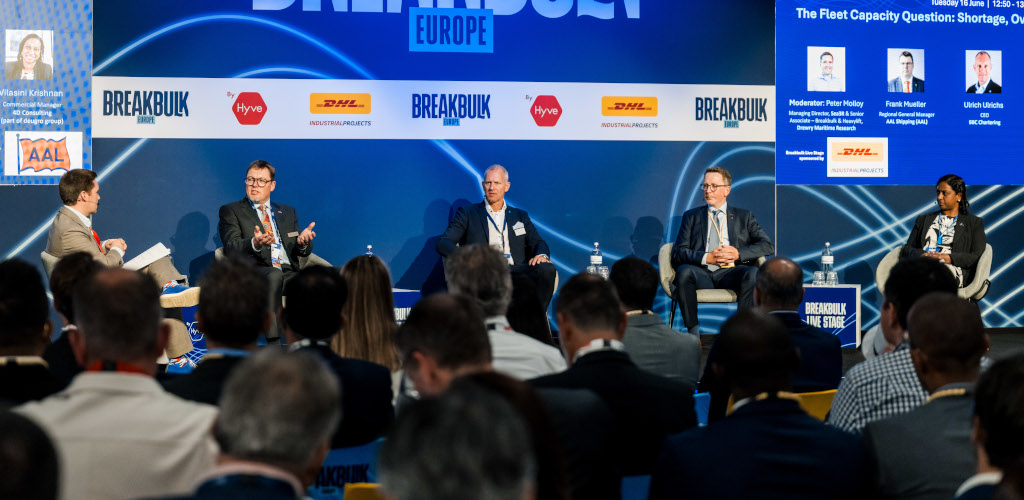
Geopolitieke ontwikkelingen, verstoringen van handelsroutes en tekortkomingen in de infrastructuur zorgen voor een ingrijpende verandering van de markt voor breakbulk- en multifunctionele schepen, zo stelden vooraanstaande vertegenwoordigers van de sector tijdens een paneldiscussie op Breakbulk Europe.
Het panel, onder leiding van Peter Molloy, algemeen directeur bij Sea3R en senior associate bij Drewry Maritime Research, stelde dat de sector momenteel te maken heeft met een zeer beperkte reservecapaciteit.
Volgens Axel van Pul, regionaal hoofd projectvracht voor Europa en het Middellandse Zeegebied bij MSC, wijzen de meest recente wereldwijde cijfers erop dat minder dan 1% van de vloot in de containersector stil ligt. „In principe vaart alles”, zei hij, waarbij hij benadrukte hoe de problemen in de Straat van Hormuz, Bab el Mandeb en het Suezkanaal de capaciteit opslokken. „Als alles weer opengaat, wordt het natuurlijk een ander verhaal, maar voorlopig zien we geen overcapaciteit.”
Voor projectexpediteurs ligt deze discussie anders. “Het gaat niet om een tekort of een overschot, maar om een mismatch,” aldus Vilasini Krishnan, commercieel manager bij 4D Consulting, onderdeel van de deugro Group. “Zijn de juiste schepen beschikbaar, zowel voor de huidige projecten als voor wat we de komende twee tot drie tot vijf jaar verwachten?”
Niet alleen de tonnage op zee vormt een potentiële knelpunt voor projecten; een aantal panelleden maakt zich ook zorgen over beperkingen aan wal. „In het Verenigd Koninkrijk staan er zoveel projecten op stapel, waaronder projecten voor koolstofafvang en SAF [duurzame vliegtuigbrandstof], maar de grootste knelpunt die we zien is de haveninfrastructuur,” zei Krishnan. „Niet alle schepen, met name die welke deze grote, gemodulariseerde ladingen kunnen vervoeren, kunnen deze verschillende havens aandoen.”
Van Pul was het daarmee eens en merkte op dat congestie in havens een wereldwijd probleem is. „Het gebrek aan haveninfrastructuur, terminalinfrastructuur en capaciteit aan de landzijde blijft de capaciteit aan de zeezijde ondermijnen“, zei hij. „Het hoeft niet per se een haven te zijn – zelfs als het slechts een overslagplaats voor vrachtwagens is, creëer je een knelpunt aan de landzijde, waardoor je schip niet kan worden afgehandeld. Daardoor wordt het een kwestie van opslagcapaciteit in plaats van vlootcapaciteit.“
De geopolitieke situatie blijft een grote invloed uitoefenen, niet alleen doordat bepaalde routes vanwege oorlogsrisico’s feitelijk zijn afgesloten, maar ook door de opkomst van een nieuw maritiem nationalisme. Dit begint zijn weerslag te hebben op de besluitvorming over nieuwbouw, aldus Frank Mueller, regionaal algemeen directeur bij AAL.
“In hoeverre sijpelt deze geopolitieke, nationalistische tendens die we wereldwijd zien, daadwerkelijk door in onze sector, waarbij expediteurs wellicht niet alleen rekening moeten houden met de beschikbaarheid en prijs van schepen, maar ook met de vraag of dit schip uiteindelijk zal worden tegengehouden nog voordat het de haven bereikt, omdat dat land – om welke reden dan ook – heeft besloten schepen onder die vlag of van die reder niet langer toe te laten?” vroeg hij.
Ook de geopolitieke situatie beïnvloedt de goederenstromen: in sommige regio’s is er sprake van een verschuiving weg van hernieuwbare energie en een heropleving van olie- en gasprojecten.
De belangrijkste boodschap van het panel was dat deze sector over het vermogen en de ervaring beschikt om zich aan deze veranderingen aan te passen, zoals hij vanaf de coronacrisis consequent heeft aangetoond. Ulrich Ulrichs, CEO van BBC Chartering, wees erop dat meer samenwerking en overleg tussen alle partijen in een vroeger stadium van het proces de resultaten voor iedereen alleen maar ten goede zou komen, wat de toekomst ook moge brengen.
Bovenste foto (van links naar rechts): Peter Molloy, Frank Mueller, Ulrich Ulrichs, Axel van Pul, Vilasini Krishnan. Bron: Richard Theemling Photography
Tweede foto: Frank Mueller. Bron: Richard Theemling Photography






.png?ext=.png)











.png?ext=.png)







_1.jpg?ext=.jpg)

-(1).png?ext=.png)










-(1).jpg?ext=.jpg)